The following literature indicates that when a person consumes soft drinks a couple of times a month, or on special occasions, there is less risk for that individual experiencing dire health issues. However, when soft drink beverages are part of a person’s daily diet, those health risks increase exponentially!
When the brain is high on soft drink beverages:
The American Psychological Association (2023) defined major depressive disorder as “A mood disorder characterized by persistent sadness and other symptoms of a major depressive episode but without accompanying episodes of mania or hypomania or mixed episodes of depressive and manic or hypomanic symptoms, included in DSM-IV-TR, DSM-5, and DSM-5-TR. Also called major depression.”
Thanarajah, Ribeiro, and Lee et al (2025) reported that when a person is diagnosed with major depressive disorder, there is a strong likelihood that the person is a heavy consumer of soft drink beverages. There is a strong possibility that there are changes in the gut microbiome when someone overloads on soft drink beverages, resulting in this mental health disorder.
Urugo, Kidane, Firew, Hunde, Endere, Semu, Getachew and Yirga (2026) mentioned the potential for depression in women and unhealthy attitudes in the adolescent population when these groups engage in consuming an overabundance of soft drink beverages.
There is also the risk of dementia and Alzheimer’s disease diagnoses from consuming soft drink beverages on a daily basis (Leech, 2026). “…the higher your blood sugar, the higher your risk of dementia” (Leech, 2026).
Fitch (2023) reported that it’s important that children and adolescents reduce their consumption of these beverages since it increases their odds of experiencing weight gain and becoming obese. The findings are based on a study that included information from 107 “countries and regions” that participated in the study. The study included a comparison analysis of these groups who were overweight and obese and found that the groups that consumed at least one soft drink every day were the ones that experienced the most weight gain (Fitch, 2023).
“High sugar intake is associated with weight gain” (Leech, 2026).
It really is a domino effect: “In particular, fructose is linked to a significant increase in the dangerous fat around your belly and organs. This is known as visceral fat or belly fat. Excessive belly fat is tied to an increased risk of type 2 diabetes and heart disease” (Leech, 2026).
As an aside, instead of these young people looking forward to having the time of their lives with everything positive waiting for them, medical appointments for diabetes and other health issues can become part of their monthly schedules.
Drinking these beverages on a routine basis can harm the body in ways we may not have thought of.
“Even just one sugary drink a day, after five to seven years, can lead to fatty liver disease, making you susceptible to heart disease and diabetes while also increasing your risk for cancer of the colon, pancreas and esophagus, to name a few” (Li, 2026).
Li (2026) also indicated that regular soft drink consumption is as bad as consuming alcohol! After the soft drink enters the liver, “sugar in beverages can get converted into fat that’s stored in liver cells. Over time, that can lead to fatty liver disease, which can, if it doesn’t improve, cause severe scarring in the liver, also known as cirrhosis. And that can be potentially life-threatening.”
Urugo, Kidane, Firew, Hunde, Endere, Semu, Getachew, and Yirga (2026) talked about other health issues that can result from daily soft drink consumption, such as “hypertension, reduced bone mineral density, and cardiovascular disease.”
Everyone by now has heard about cancer diagnoses among people under 50 years of age. There could be a possible explanation for women being diagnosed with colorectal cancer.
Women who are under 50 years of age and are diagnosed with colorectal cancer may have been enthusiastic consumers of soft drink beverages when they were between 13 and 18 years of age and continued consuming these beverages in their adulthood (Washington State University Of Medicine, 2021).
Washington State University Of Medicine (2021) further stated that, “Compared with women who drank less than one 8-ounce serving per week of sugar-sweetened beverages, those who drank two or more servings per day had just over twice the risk of developing early-onset colorectal cancer, meaning it was diagnosed before age 50.”
Urugo, M. M., Kidane, B., Firew, S., Hunde, W., Endere, S. D., Semu, A., Getachew, S, & Yirga, Y. (2026). Comprehensive Review Of Carbonated Soft Drink Consumption Rates And Their Public Health Importance. Retrieved From https://link.springer.com/article/10.1186/s12889-025-26141-2
Washington University School Of Medicine. “Sugar-Sweetened Drinks Linked To Increased Risk Of Colorectal Cancer In Women Under 50, Study Finds.” ScienceDaily. Retrieved August 16, 2026 from www.sciencedaily.com/releases/2021/05/210506183353.htm
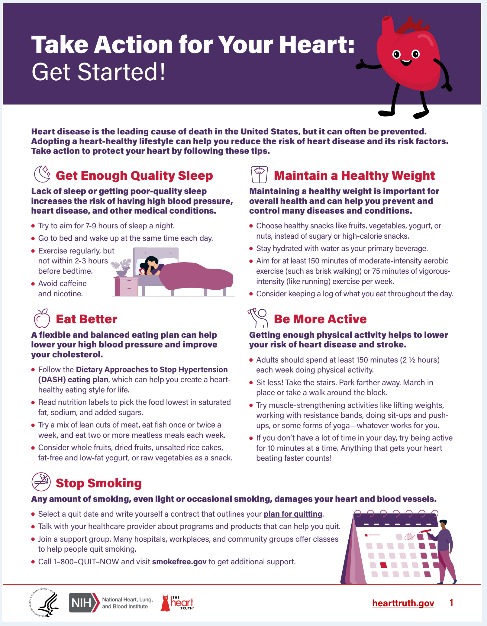
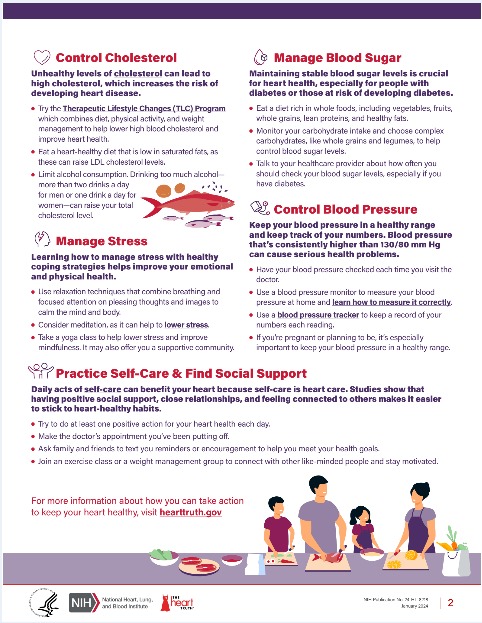
The American Brain Foundation (2025) indicated the many benefits of incorporating healthy nutrition and physical activities in one’s lifestyle in lowering the risks of the numerous cognitive issues (i.e., dementia, stress, anxiety, stroke, etc) and heart disease.
The National Heart, Lung, And Blood Institute (2026) offers the following fact sheet for our perusal:
Finally, the American Heart Association (2026) provides the correct terminology regarding the symptoms a person may experience in a heart emergency:
When every region on this planet has an adequate amount of mental health facilities, therapists, and medicine to treat its citizens, perhaps we can then say we’re entering a phase of global health success! Many people are living in war-torn areas, while others are dealing with natural disasters. These calamities take a toll on a person’s mental health. That is one reason why mental health experts are especially important for these global residents.
The References
The following resources have a wealth of information for individuals experiencing mental health conditions, for those providing emotional support to loved ones who’ve been diagnosed, and others without conditions who simply wish to become more knowledgeable regarding mental health sciences.
The Importance Of Relaxing
The following nature video (Relaxing Tree, 2020) is a reminder that visiting parks and listening to the sounds of nature can become a vital ingredient in having and maintaining calmness for positive mental health. It can become a method of getting away from it all periodically!
[VIDEO: 4K RELAXING NATURE SOUNDS – SHORT VIDEO CLIPS OF NATURE: SOURCE: RELAXING TREE, 2020]
Other forms of relaxation can involve meditating, engaging in yoga exercises, participating in arts such as sewing, crocheting, knitting, reading publications from favorite bookstores, and taking a walk after dinner, which can help reduce a few calories as an added benefit. Listening to quiet music, cooking/baking, gardening, housework, painting, sculpting, coloring in a coloring book, landscaping, drawing, building furniture, writing in a spiral notebook about one’s feelings and experiences, and watching television are also forms of relaxation.
A Person Should Never Label Oneself
An important aspect to remember is that just because a person is diagnosed with a mental health condition doesn’t suggest even remotely that they are a mental health condition. What the diagnosis means is that it’s another one of life’s challenges.
A Person Should Never Blame Themselves, Nor Compare Themselves
Some people will experience influenza and will suffer from symptoms temporarily. It could be because they’re younger, have no prior history of respiratory issues, and lack a compromised immune system. Conversely, other people may have a longer bout of the illness since they have a prior history of respiratory issues, they’re older, and already have a compromised immune system.
In a similar vein, each person who is diagnosed with a mental health condition may have a different reason for their mental health condition. For example, a person could be diagnosed with schizophrenia because they also have a form of Alzheimer’s Disease (i.e., comorbidity–more than one condition). Another person is diagnosed with schizophrenia because they have a sibling (twin) or a parent who was diagnosed with the condition years earlier (i.e., genetics). In taking the conversation in another direction, a person could be diagnosed with mild depression and needs medication temporarily because it began with becoming overwhelmed by life. They experienced too many negative personal life events. And then for another person diagnosed with depression, they may have to use prescriptions for the rest of their life because their brain chemistry has changed dramatically.
The associations, the causations, the bottom-up (i.e., physical illness bringing on the mental health condition), and other explanations are too involved and nuanced for the “How did this person acquire a mental health condition?” Thus, there can be any number of reasons why a person acquired a mental health difficulty, and it may not be a similar reason for other people with the same condition. Also, there could be situations where there are no known current explanations why someone ended up with a mental health condition, because those reasons are waiting for scientific discovery.
Getting Rid Of Stigmas
In the constant struggle to remove the stigma that remains in society concerning mental health challenges, people with psychiatric issues need to remember that they are not alone. Everyone has some form of mental health issue. Some mental health issues are minor, others are large, while others are dealing with comorbidity. Whatever the circumstance, everyone has something they’re dealing with. A person needs to keep going and live their life to the best of their ability!
There Is No Room For Negativity
Anyone who would make comments that a person with a mental health condition needs to “Get over it” or some other form of mocking/psychological abuse is not someone who should be in anyone’s social circle during the adjustment and recovery phase, and that could be for a lifetime. When a person is dealing with a psychiatric issue, they need supportive individuals who provide empathy and lots of encouragement. Actually, the toxic entities could be individuals who contributed to the mental health condition.
A Mental Health Issue Is Not Necessarily Psychiatric, Requiring Medication
A psychiatric issue occurs when the brain chemistry has changed (i.e., an imbalance of a specific neurotransmitter) and a clinical therapist is required (i.e., psychiatrist). For instance, a person diagnosed with schizophrenia has an imbalance of dopamine (an imbalance of dopamine is associated with schizophrenia). Thus, medication is necessary to create a healthy brain chemistry. Other people may have phobias (i.e., height, insects, certain animals, specific places, etc.), and a psychologist would be suggested for learning techniques in removing said phobias. A psychologist is ideal when experiencing relationship difficulties. A psychologist might be used for cognitive behavioral therapy (CBT) to help a client learn new thinking strategies in maneuvering life, along with achieving goals.
The following is a video that talks about psychotherapy, which is a completely different brand of therapy altogether:
[VIDEO: WHAT IS PSYCHOTHERAPY? SOURCE: PSYCH HUB, 2020]
Family Members Becoming Involved In Their Loved Ones’ Journey
It cannot be emphasized enough that family members can make important contributions when a person is diagnosed with a psychiatric condition. Members can provide a guardrail of sorts in making certain that individuals keep doctor’s appointments with therapists and take prescribed medications. They can even attend these doctor appointments with their loved ones. The person diagnosed with a psychiatric condition can believe that they have partners in gaining a positive quality of life. In extreme cases, a family member may need to obtain conservatorship. All of these suggestions can avoid potential tragic situations with law enforcement, which we hear all too often in the media.
Weight Gain From Medications Is A Possibility, Although…
People who are diagnosed with a psychiatric condition need to ask the therapist for prescriptions that have a much lower possibility of weight gain. Many of these psychotropics and antidepressants (Bright Horizons Psychiatry, 2024) are not only responsible for a larger waistline, but also for the possibility of experiencing metabolic syndrome because of the additional weight gain (i.e., higher blood pressure, higher blood sugar leading to cardiovascular issues) (Cleveland Clinic, 2025). Conversely, a psychotropic and antidepressant may not necessarily cause actual weight gain. Taking these medications can result in a complete change to the body’s metabolism. Some individuals can experience fatigue, water retention, hormonal changes, and other modifications without additional calories to their diet (Bright Horizons Psychiatry, 2024).
As an aside, imagine the middle-aged woman who was already experiencing metabolic syndrome because of weight gain from hormonal changes (menopause), and is now prescribed an antidepressant or psychotropic. She will have to worry about even more weight gain difficulties, and unfortunately, could become a likely candidate for cardiovascular issues, and worse.
An Important No-No
If a person wants to go off their medication, that procedure needs to be done with the guidance of the therapist and gradually! Waking up one morning and deciding to cease taking medication can send an individual spiraling out of control, and with tragic consequences to themselves and others.
Finally, dealing with a mental health condition, especially one that has altered the brain chemistry, is rough! Having said that, once a person has gained clarity through doctor visits and taking medication, a person could use their condition and start anew with living their life instead of merely existing!
Here’s wishing you good health, love, and lots of understanding!
Vikki
References
American Academy Of Neurology. (2025). Brain Health For All. Retrieved From https://www.aan.com/
American Psychological Association. (2025). We promote psychological science and knowledge to benefit society and improve lives. Retrieved From apa.org
Europe’s Journal Of Psychology. (2025). An Online-Only, Open-Access Journal For Scientific Inquiries Into A Wide Range Of Topics In Psychology – Free Of Charge For Authors And Readers. Retrieved From https://ejop.psychopen.eu/index.php/ejop
Therapy In A Nutshell. (2025). No One Ever Taught You How To Regulate Your Emotions. Let’s Change That Today. Retrieved From https://therapyinanutshell.com/
If you have loved ones with diabetes, please share the following article with them: 9 of the Best Foods for Diabetics. The mentioned foods can lower blood pressure and blood sugar levels, encourage weight reduction, provide necessary vitamins, and a lot more.
Individuals with pre-diabetes, or the full-blown condition, may experience personality changes (i.e., mood swings, irritability). We have to pay close attention to loved ones who suddenly have personality changes and suggest immediate medical attention. While these clues are important, we have to view diabetes from another perspective to understand what may happen for loved ones taking psychiatric medications.
Metabolic Syndrome is a group of risk factors which nurtures coronary artery disease, stroke, and Type 2 diabetes. The symptoms are elevated levels of cholesterol, blood pressure, blood sugar, and excess belly fat. Two medications closely associated with the syndrome are Clorazil (schizophrenia) and Zyprexa (schizophrenia and bipolar disorder). These medications can elevate cholesterol and blood sugars five-fold, creating a profoundly dangerous health condition.