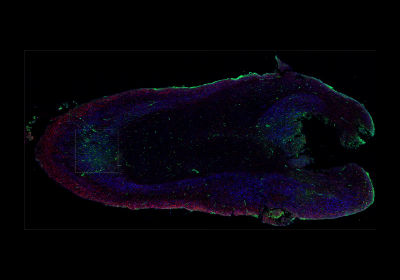
“Should childhood lead exposure prove pro-degenerative, the next twenty years will provide the last opportunities for possible early intervention to forestall greater degenerative disease burden across the aging lead-exposed population” (Reuben, 2018).
WHAT ARE LEAD TOXINS AND HOW CAN EXPOSURE RESULT IN DEMENTIA? –
Lee, Lee, Warren, and Ferrie (2022) defined lead as a neurotoxicant that can harm the growing brains of children, and that harm can be irreversible! “No amount of lead is considered safe for human consumption” (Lee, Lee, Warren, & Ferrie, 2022).
According to Cleveland Clinic (2024), “Neurotoxicity is an umbrella term for neurological damage that happens due to exposure to natural or manufactured toxins.” Also, “There are hundreds of neurotoxicants. They can come in gas, liquid and/or solid form. For some neurotoxicants, trace amounts of them or a single exposure can cause symptoms. For others, only large amounts and/or repeated exposure cause noticeable symptoms” (Cleveland Clinic, 2024).
Further, “…lead-exposed children were significantly associated with reduced gray matter volume in areas responsible for memory function and dementia at age 45 (8) and lower language/executive function at age 64 (9)” (Lee, Lee, Warren, & Ferrie, 2022).
LEAD TOXIN EXPOSURE IS NOT NEW – THE AMERICAN INDUSTRIAL REVOLUTION
The American Industrial Revolution, or as some scholars refer to it, “The American Industrial Evolution”, was exciting because the country was going from a mostly rural and agricultural country to windmills, manufacturing, steamboats, textiles, railroads, machinery, steel mills, industrial factories, electrical power, telephones, women and children working, and the Ford Model-T, to name a few inventions and innovations (Paradowski, 2021). This modernization of America occurred during the late 18th century through the mid-19th century (Phase I), and then picked up from the mid-19th century through the early 20th century (Phase II) (Paradowski, 2021). The reader can gather more information from Niiler (2025) “How The Second Industrial Revolution Changed Americans’ Lives.”)
The American transformation also brought along health and safety issues (Beck, 2026).
One particular issue was air pollution, which these new factories produced, releasing chemicals and grime into the atmosphere (Beck, 2026). The coal mines offered a double whammy! Coal mine workers (adult and child labor) were exposed to lead dust in the mines (inhalation). People living near the mines were exposed because those particles were emitted into the air (Beck, 2026).
The homes built for workers were made of poor-quality materials, and it’s anyone’s guess what hazardous chemicals and materials were used during this era (Beck, 2026). As an aside, construction workers who built the homes were also exposed to those chemicals and dust particles before the residents moved in.
HOW THE LEAD TOXINS ARE INTRODUCED TO CHILDREN –
Rabin (2011) stated that, “It is well known that the major source of such poisonings is the lead paint applied to homes 40, 50, and 100 years ago. And because as many as 25 – 30 million dwellings in the United States are estimated to have lead paint, it is not a problem that will be easily remedied(1).”
This paint could be found in “…homes on woodwork, baby cribs, and other furniture” (Rabin, 2011), and “window sills, porch railings” (Rabin, 2011).
McFarland, Hauer, and Reuben (2022) reported that lead is also found in gasoline and water pipes.
Air, dust, and food are other sources of lead (Wang, Bakulski, Walker, Mukherjee, Dodge, Albin, Paulson, & Park, 2026).
“Lead is a developmental neurotoxicant in wide industrial use that was once broadly distributed in the environment (McFarland, Hauer, & Reuben, 2022).
According to McFarland, Hauer, and Reuben (2022):
“During the peak era of leaded gasoline in the United States, which ran from the late 1960s to the early 1980s, the average blood–lead level (BLL) for the general US population was routinely three to five times higher than the current reference value for clinical concern and case management referral (3.5 micrograms of lead per deciliter of blood) (3–5). Consequently, millions of adults alive today were exposed to high levels of lead as children. While these exposures were deemed harmless at the time, animal studies and epidemiological evidence accrued in the intervening years reveal that such exposures likely disrupted healthy development across multiple organ systems (particularly the brain, bone, and cardiovascular systems), resulting in subtle deficits to important outcomes, such as cognitive ability, fine motor skills, and emotional regulation (6), that may influence the trajectory of a person’s life (e.g., their educational attainment, health, wealth, and happiness). These deficits largely persist across time and, in some cases, worsen (7, 8) and are now hypothesized to put individuals at risk for difficult-to-treat chronic and age-related diseases, including cardiovascular disease and dementia (9–11).”
THERE WAS A LACK OF ACCURACY IN THE SCIENTIFIC TESTING INSTRUMENTS –
While childhood lead poisoning became an American health concern in the 1960’s – 1970’s, there were parents in the early part of the 20th century (1920’s – 1930’s) bringing their infants and small children to hospitals with symptoms associated with lead poisoning (Rabin, 2011). During that era, doctors didn’t understand what medical conditions were being presented to them until there was an increase of those incidents and familiarity with symptoms (Rabin, 2011). Colic, spasms, hyperactivity, learning disabilities, motor coordination, and convulsions are some of the symptoms associated with childhood exposure to lead (Rabin, 2011).
Blood lead tests are one method used to diagnose whether a child has lead poisoning (neurotoxin) (Cleveland Clinic, 2024). Unfortunately, however, blood lead tests were not available until after 1940 (Rabin, 2011). Bone X-rays were used in 1930 to determine lead absorption (Rabin, 2011).
To gain a better understanding of how bone X-rays were beneficial in determining lead exposure, Wang, Bakulski, Walker, Mukherjee, Dodge, Albin, Paulson, and Park (2026) explained that, “Bone is the principal long-term reservoir for lead. The greatest lead accumulation occurs during periods of high mineral deposition and can persist for decades. Lead is then remobilized with age-related bone resorption, creating ongoing internal exposure despite contemporary declines in environmental lead. Thus, bone lead levels serve as a marker of cumulative exposure, including exposures during earlier life.”
WHEN THOSE TOXINS ARE LOCAL –
We have been dealing with the issue of lead in my hometown of Cleveland, Ohio it seems like forever! The health issues that result from the toxin are tragic because children are mainly affected.
Case Western Reserve University (2026) reported that “Cleveland has one of the highest percentage of children with elevated lead levels in the United States.” In fact, “Cleveland has higher lead levels than Flint, Michigan, whose own lead problems sparked national coverage and outrage.”
In the Cleveland area, “…some neighborhoods seeing rates as high as 25 percent” (Case Western Reserve University, 2026).
One of the culprits of lead exposure is that approximately “90 percent of Cleveland’s housing supply was built before 1978, when lead paint was banned in consumer applications.” Sadly, the potential exists that lead toxins remain in some of these dwellings, wreaking havoc on residents’ health, perhaps unbeknownst to them.
Hack (2026) talked about the endless opportunities through local government to remove these toxins in Cleveland, in Cuyahoga County suburbs, the programs available such as lead safe home repair grants, what residents can do to get their homes tested, and further information in establishing cleaner communities and healthier children.
Neurotoxicity is an important term that Cleveland Clinic (2024) discussed because exposure to lead toxins can cause this neurological medical condition affecting the central nervous system. An individual’s particular condition might be treatable or long-term. Death can also occur.
“Neurotoxicity may result from exposure to excess amounts of normally nontoxic substances, like certain medications. Or it can result from substances that are neurotoxic at all doses, like lead” (Cleveland Clinic, 2024).
Neurotoxins are airborne particles breathed into the body and ingested through foods and drinks. Neurotoxins can be found in dust particles.
It doesn’t matter where we are or go. Even in the cleanest environments, dust particles can land on our clothes, in our food, in our drinks and then enter our system. Dust is airborne and travels. It’s everywhere!
Cleveland Clinic (2024) emphasized the myriad of health conditions and symptoms that can occur when exposed to these airborne substances. “Exposure to certain neurotoxicants during fetal development and early childhood has been associated with several conditions.” And this is where things become increasingly interesting: If there is a possibility that lead toxin exposure in childhood is associated with dementia in adulthood, those same children may experience the following conditions before dementia sets in:
Cleveland Clinic (2024):
- Attention-deficit/hyperactivity disorder (ADHD);
- Learning disabilities;
- Depression;
- Anxiety;
- Schizophrenia, and
- Autism Spectrum Disorder (ASD).
As an aside, the discussion of the origins of autism have been particularly controversial over several years. Could neurotoxins (i.e., lead) be a contributor to this medical condition in children? Were these children poisoned innocently with lead toxins during their fetal development?
It’s something to consider.
Vikki
References
Beck, E. (2026). Negative Impacts Of The Industrial Revolution: A Detailed Summary. Retrieved From https://historycrunch.com/negative-impacts-of-the-industrial-revolution/
Case Western Reserve University. (2026). Frances Payne Bolton School Of Nursing. The Lead Paint Epidemic. Retrieved From https://case.edu/nursing/research/research-studies-labs/cleveland-schools-lead-screening-project/lead-paint-epidemic
Cleveland Clinic. (2024). Neurotoxicity. Retrieved From https://my.clevelandclinic.org/health/diseases/neurotoxicity
Hack, C. (2026). More Recent News. Cuyahoga County Fails To Fully Spend State Lead Grant, Forfeiting Nearly $1.2 Million. Retrieved From https://signalcleveland.org/cuyahoga-county-forfeits-nearly-1-2-million-in-lead-paint-grant/
Lee, H., Lee, M. W., Warren, J. R., & Ferrie, J. (2022). Childhood Lead Exposure Is Associated With Lower Cognitve Function At Older Ages. Retrieved From https://www.science.org/doi/10.1126/sciadv.abn5164?referrer=https%3A%2F%2Fsearch.yahoo.com%2F
McFarland, M. J., Hauer, M. E., & Reuben, A. (2022). Half Of U.S. Population Exposed To Adverse Lead Levels In Early Childhood. Retrieved From https://pmc.ncbi.nlm.nih.gov/articles/PMC8931364/
Niiler, E. (2025). How The Second Industrial Revolution Changed Americans’ Lives. The Rapid Advancement Of Mass Production And Transportation Made Life A Lot Faster. Retrieved From https://www.history.com/articles/second-industrial-revolution-advances
Paradowski, R. J., PhD., (2021). American Industrial Revolution. Retrieved from https://www.ebsco.com/research-starters/history/american-industrial-revolution
Rabin, R., MSPH. (2011). Warnings Unheeded: A History Of Child Lead Poisoning. American Journal Of Public Health. Vol. 79(12):1668–1674. doi: 10.2105/ajph.79.12.1668
Reuben, A. (2018). Childhood Lead Exposure And Adult Neurodegenerative Disease. Retrieved From https://pmc.ncbi.nlm.nih.gov/articles/PMC6454899/
Wang, X., Bakulski, K. M., Walker, E., Mukherjee, B., Dodge, H., Albin, R. L., Paulson, H. L., & Park, S. K. (2026). Exposure To Lead And Incidence Of Alzheimer’s Disease And All-Cause Dementia In The United States. Retrieved From https://alz-journals.onlinelibrary.wiley.com/doi/10.1002/alz.71075