The American Brain Foundation (2025) indicated the many benefits of incorporating healthy nutrition and physical activities in one’s lifestyle in lowering the risks of the numerous cognitive issues (i.e., dementia, stress, anxiety, stroke, etc) and heart disease.
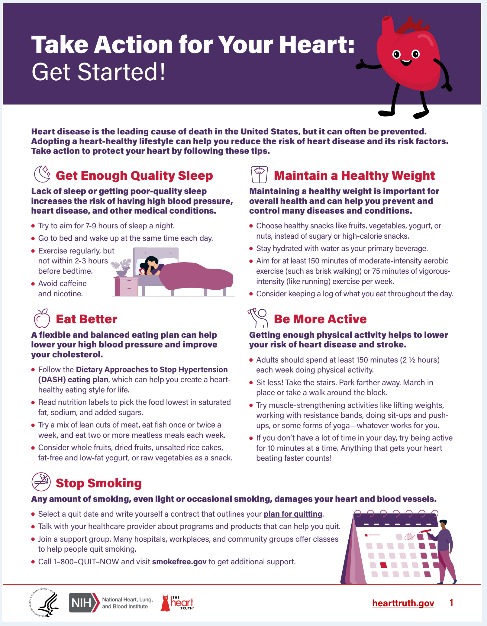
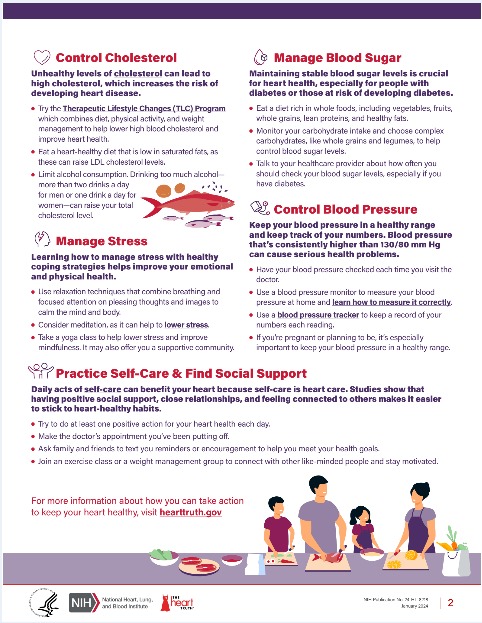
The National Heart, Lung, And Blood Institute (2026) offers the following fact sheet for our perusal:
Finally, the American Heart Association (2026) provides the correct terminology regarding the symptoms a person may experience in a heart emergency:
Psychology occasionally steps outside the discipline and looks at social problems occurring in society. Instead of discussing, for example, how schizophrenia is associated with Alzheimer’s, how insomnia can become linked to weight gain, how people taking certain medications should stay away from eating grapefruit products, what exactly is causing the increase in autism among children, and other worthwhile topics, psychology takes a brief sabbatical and converges with sociology. Sociology can help explain circumstances that are happening within society and the correct approaches to how those particular issues can be remedied. After all, people affected by the phenomenon can end up in a therapist’s office seeking advice as a result!
Thus, an important conversation about illiteracy, and the Americans who are personally dealing with the issue!
THE NUMBERS ARE GRIM
Parker (2025) indicated “Approximately 79% of adults in the United States have medium to high English literacy skills, leaving about 21%. These 21% of the adults with low literacy rates amount to approximately 43 million adults in the country.” This information coincides with what Craft (2025) reported earlier this year.
Parker (2025) also mentioned:
As an aside, a state’s literacy rate is the average of all the cities within that state. Thus, a state can have a respectable literacy rate, while a few cities within the state require important resources to help members of the population learn important life skills.
INSPIRING! PEOPLE TAKING THE INITIATIVE TO IMPROVE THEIR QUALITY OF LIFE
Morris (2025) pointed out that Seeds of Literacy is an important resource that helps individuals become proficient in critical life skills. In his article “Why Are So Many Adults Struggling With Low Literacy In Cleveland And Beyond?”, he spoke with individuals who participated in the program and the issues they faced during their early years in the public school system.
The problems described in the article that interfered with quality education are varied (Morris, 2025):
Family responsibilities
The breakdown of the family
Self-esteem issues
Instructor indifference
Inadequate curriculum
Learning disabilities
The lack of resources within the school district to address students with learning disabilities
School desegregation (busing) (i.e., students dropping out of the system altogether)
SEEDS OF LITERACY IS EXTREMELY EFFECTIVE!
“Seeds of Literacy CEO Bonnie Entler said the nonprofit is seeing increasing demand for its services, year after year. Its model allows students to come as they are, whenever they’re able, for as long as they like, with three sessions – in the morning, afternoon and evening. There’s a virtual classroom and assistance with learning how to use computers” (Morris, 2025).
PROGRAMS AVAILABLE ACROSS THE COUNTRY
In Houston, Texas, the Barbara Bush Houston Literacy Foundation (2025) is doing its part in tackling the illiteracy issue with “Houston’s Adult Literacy Blueprint.”
The National Coalition For Literacy (2025) has a page titled “Adult Learners’ Stories” where participants discuss completing their GEDs, others earning their high school diplomas, and their journeys in the program.
ProLiteracy.org (2025) in Syracuse, New York has a program where people can volunteer with “Teach An Adult To Read. Inspire The World To Change.”
While some people believe they have learning disabilities, this author believes that everyone learns differently! Learning Disabilities Of America (2025) offers various learning methodologies for individuals from San Jose, California (Barton Reading And Spelling System), Prides Crossing, Maine (Landmark Methodology), Bloomington, Minnesota (Project READ), Bellevue, Washington (Slingerland Approach), and other parts of America with their independent programs.
Finally, a person has to admit that illiteracy is an unpleasant national issue to address! However, the best way to resolve the problem is to bring it to the forefront and acknowledge the resources available, so that people can obtain access to those resources and start on a path to a better quality of life and more opportunities. We’re talking about critical life skills here.
It’s never too early to think about personal goal attainment for the new year and begin the planning stage of the process. Writing down goals can unravel potential achievements. A person can look at them and analyze if they are one, several, or one enormous goal with different parts.
A person needs to ask themselves a few questions while this stage commences:
(Even though you may already know the answer, ask yourself) What are my values?
Are any of these goals unimportant?
How realistic are these goals?
How long (i.e., a guesstimate) will it take for this particular achievement?
Do any of these goals necessitate resources to bring them to fruition?
Which ones take priority over the others?
Which ones are short-term or long-term goals?
Will any of these goals lead directly to the conclusion of a longer-term one?
For those of you with a Project Management background, is there a deadline (i.e., the end date) you would like to achieve any personal goal?
Thinking and planning can reduce the unnecessary emotional discomfort of any new goal season. Also, a person should understand that having limited goals doesn’t mean they’re limited as a person. They’re focusing on the most important goals that they can visualize will reach a hard-earned reward. Visualizing an accomplishment is 90% of the work!
All the best to you as I know you will succeed in bringing your goals to fruition!
Vikki
*As an aside, every day is a new season of the planning stage for goal attainment. Also, if the terms “goals, goal-attainment, achievements, and accomplishments” are too overwhelming, give them a nickname to make those efforts reach a positive conclusion.
Our immediate thoughts are on the military and football players when brain injury is the topic of discussion. These injuries can become life changing for the patient, and heart wrenching for loved ones who see an unfavorable difference in personality and disposition.
Those who suffer from Intimate Partner Violence (usually women), are individuals who also deserve recognition for brain injuries because they, too, experience debilitating cognitive issues. Many from this community lack awareness that they even have brain injuries, and could have experienced several over the duration of the abusive relationship from their partner.
THE KEY ASPECT THAT PLAYED A ROLE IN IPV
Domestic violence increased tremendously because of the COVID-19 Pandemic lockdowns (Ballard, 2022) and (George, Wesley, & Geraghty, 2021).
“There are households where the pandemic has become a reason why family members finally interact with each other. In some cases, this helps to enhance the quality of relationships within a family. However, in families where there are abusive patterns, the home confinement and social isolation can be very dangerous to the victims” (George, Wesley, & Geraghty, 2021).
AN IMPORTANT FINDING
Ballard (2022) mentions a conference that was held earlier this year: Seeking Tomorrow’s Answers Together [STAT]. One of the topics was how COVID-19 affected mental health.
Lockdowns were detrimental for people in abusive relationships!
These are people who were literally held hostage by their abusers because the abusers had unlimited access to their victims.
Thus, lockdowns created a more dangerous existence for people who may have been already living with IPV.
CONCLUSION
Intimate partners, the medical community, safety forces, the various legal institutions, and society in general, all need to recognize that brain injuries due to the IPV epidemic is prevalent. Then, they can become aware of behaviors [symptomology] that are associated with those subjected to IPV (Costello & Greenwald, 2022), (Hillstrom, 2022), (Sutherland & Chakrabarti, 2022), and (Valera, 2022).
This knowledge can help remove misconceptions about these individuals, especially when they are confronted with life-and-death situations independent of their abusers.
Costello, K., & Greenwald, B. D. (2022). Update On Domestic Violence And Traumatic Brain Injury: A Narrative Review. Retrieved From https://pubmed.ncbi.nlm.nih.gov/35053865/
It’s a known fact that many people (not all!) with schizophrenia experience auditory hallucinations. Conversely, individuals on these prescribed medications in treating schizophrenia can suffer from a decline in cognition (i.e., slurred speech, reduction in thought processing, slowed gait).
It has to be emphasized these particular above-mentioned cognitive processes were healthy before medications were administered.
Thus, there is a potential argument which can suggest that a patient using medicine to treat schizophrenia may experience a side effect involving their hearing.
Research is necessary to ascertain just how devastating this health issue can become for current patients, new patients, and patients in the future, all diagnosed with schizophrenia.
Walter Reed Army Institute Of Research. (2021, May 4). Chronic Exposure To Low Levels Of Blast May Be Associated With Neurotrauma: Exposure During Occupational Training Is Linked To Biomarkers Of Brain Damage. ScienceDaily. Retrieved May 7, 2021 from http://www.sciencedaily.com/releases/2021/05/210504112644.htm



 Victoria Sutton's Psychology Blog
You must be logged in to post a comment.