Choice

Destructive behaviors occur for many reasons: Family violence, congenital brain malfunctions, deep-brain injuries, biology, negative conformity either from family or peers, drug usage, and other explanations which the psychological community discusses on a regular basis. However, there are instances when these causations don’t apply.  As a result, every individual who exhibits these behaviors doesn’t necessarily have a personality disorder.  Rather, it’s a preference over socially-acceptable behaviors.

Vikki

Borderline Personality Disorder

Individuals with Borderline Personality Disorder (BPD) have wild mood swings, short-term intense depression and anxiety, engage in risky behaviors (i.e., sexual practices, driving habits, gambling, illegal drug use), and self-injury.  They do not have a sense of themselves, and have a fear of being alone.  The individual with BPD has relationship difficulties because they antagonize people they once held in high regard.  Because they view issues as either positive or negative, they cannot find the middle ground where appropriate.  They exhibit anger management problems and can become violent.

Causes of BPD:

  • Abandonment in childhood (genuine or imagined)
  • Brain Abnormalities (i.e., emotion regulation, aggression)
  • Chemical Imbalance (i.e., serotonin)
  • Child Abuse
  • Genetics

Additional problems resulting from BPD:

  • Alcoholism
  • Anxiety Disorders
  • Bipolar Disorder
  • Confrontations with Law Enforcement
  • Eating Disorders
  • Excessive Debt
  • Illegal Substance Abuse Addiction
  • Sexually-Transmitted Diseases
  • Unexpected Pregnancies

Psychotherapy and drug therapy* are treatments for BPD.

*When absolutely necessary.

Vikki

When a Friend is Grieving*

image

There are no easy answers to help a friend when they experience a death in the family. The only thing we can do is consider a few things  to help minimize suffering.  Visit often and keep them company.  We don’t even have to utter a word. Just being there is gratifying because they won’t feel alone. Purchase groceries, help with household  chores, and go along with them to run errands. When we believe they’re ready for social activities, take them someplace that’s low-key (i.e., a quiet restaurant, or invite them over for dinners with a limited number of guests).  They require a comfort zone, and we don’t want to overstimulate their emotions. If they indicate that they can’t move beyond the grief, inform them gently that it’s a process and takes awhile.  Finally, it’s good for them to discuss the beautiful memories they had with their loved one.  It allows the deceased to live forever.

*If a friend experiences mild depression for approximately six months, it’s advisable they seek counseling immediately.

Vikki

The Psychopath*

Psychopathy is a personality disorder with the following traits:

Lack of remorse (The Hallmark)

Lack of conscience

Lack of regard for others

Pathological liar

Charming

Emotionally bankrupt

Manipulative

Criminal and could become violent

Any age, gender, socioeconomic background

While someone with an Antisocial Personality Disorder (ASPD) is not a psychopath, the psychopath can be antisocial, creating a comorbidity (more than one disorder).  The following are traits for ASPD:

First Level – Immoral/Non-Criminal

Deceptive

Manipulative

Charming

Often angry and arrogant

A need to bring down others to raise their own standing

Second Level – Criminality

Deceptive

Lack of remorse

Charming

Potential for violence

May have been incarcerated

We need to add another layer to the psychopath.  If a psychopath possesses ASPD, they are also a narcissist because the former and latter have similar traits.  The following are traits for Narcissistic Personality Disorder (NPD):

Self-centered (The Hallmark)

Exaggeration of talents and achievements

Charming

Takes advantage of other people to achieve their own goals

Have excessive feelings of self-importance

Have unreasonable expectations

Reacts to criticism with shame, rage, and humiliation

Remain vigilant to prevent from becoming a victim.

*Between 50 – 75% of the American violent prison population are psychopaths.

Vikki

Mental Health Recovery: Healing the Entire Body

55620-004-0B8EF544

Along with Cognitive Behavioral Therapy (CBT), psychotherapy, drug therapy where necessary, Pet Therapy, and a few other disciplines mentioned in earlier posts, there are others which benefit the individual recovering from mental health difficulties.  The therapist can suggest them during stages of the recovery process to bring maximum outcomes.

Acupuncture A licensed practitioner inserts needles in various points in the body to give relief to the individual from aches brought on from mental health problems.

Exercise Fitness routines are so important for members of the general population to engage in, and particularly individuals with mental health difficulties.  Exercising allows them to look outward instead of focusing on psychological issues.  Additionally, endorphins (a group of neurotransmitters) are released throughout the body during fitness routines.  The individual is now placed in a calmer, happier frame of mind.

Massage Therapy A lower body immune system can result from lengthy mental health problems.  This particular discipline removes the agonizing tension by a licensed practitioner manipulating the deep layers of the muscles and connective tissue, giving a sharp boost to the immune system.

Positive Psychology It can be devastating news when a person is diagnosed with a mental health issue, and result with a loss of self-esteem.  This discipline assists in returning self-worth, joy, continuation of goals, and has the individual living instead of merely existing. Positive Psychology doesn’t ignore the medical condition, but primarily focuses attention on the individual’s fine qualities. As a result, the individual will understand that they are still a good parent, spouse, neighbor, friend, son, daughter, nephew, aunt, grandparent, uncle, and excel in their profession.  The individual will also learn that even though they have a medical condition, they should never define themselves by their condition.

Positive Relationships Everyone should be involved in positive relationships.  For the individual experiencing mental health problems, it’s so vitally important that relationships are positive with family, friends, employers, and co-workers.  As a result, the therapist may inform them that negative relationships were contributing factors in the medical condition.

There are various ethically-approved disciplines available for the individual experiencing mental health challenges. They can experience a life of fulfillment with many wonderful opportunities awaiting them.

Vikki

Panic Attacks

images panic attack 7

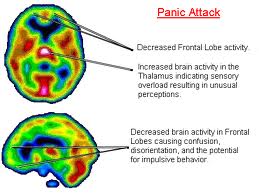
One of the numerous Anxiety Disorders is the panic attack, and this medical condition can overtake an individual in any given situation.  Once an individual has had their initial attack, they’re automatically conditioned to have more of them.  The following scenario is an example of what occurs for members of this population.

They’re driving taking the same routes they always have on the way to work, pick up the children, visit relatives and friends, or shop at the mall.  Suddenly, a sensation of an alarm goes off inside their head.  It’s a feeling of doom, death, and loss of control. Physiological reactions begin with clammy hands on the steering wheel, and a tight grip on the wheel for dear life. Perspiration appears on the forehead, upper lip. Their heart is beating rapidly, and entire body is trembling.  They believe they’re having a heart attack, and pull over to the side of the road to collect themselves.

Panic attacks occur because of biological predisposition, learned behavior (i.e., catastrophizing), the individual was subjected to a tremendous amount of stress the prior year before the panic attacks began, or an abnormality in the brain.  Also, this medical difficulty can result from positive events (i.e., getting married, new employer, childbirth, purchasing a residence, etc.).

Panic attacks can be treated successfully (after the physician has ruled out a heart condition) with relaxation methods (i.e., yoga, meditation), psychotherapy, Cognitive Behavioral Therapy (CBT), and a temporary low-dosage drug therapy.

Vikki

Conversion Disorder: A Neurological Issue

images  Neurology 3


If an individual is going to suffer psychologically from a stressful/traumatic event, Post-Traumatic Stress Disorder (PTSD) is generally the condition they will experience.  However, there are individuals who may experience repressed memory.  This difficulty pertains to the brain’s inability to handle the event, the individual attempting to block memory of the event, with memory of the event tossed involuntarily into the subconscious (unconsciousness). Another result which can occur from these events is a conversion disorder.  Let’s place this medical condition under a microscope for examination.

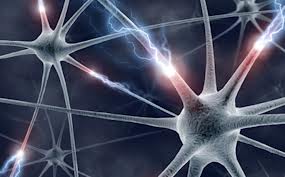
A conversion disorder is when the individual experiences neurological ailments brought on soon after an emotionally stressful event, with neurological assessments unable to rationalize the problem.  The disorder can leave the individual with sudden numbness, paralysis, deafness, blindness, seizures, mute, and other neurological difficulties. Members of the population who are more at risk are those who have had earlier physical ailments, or mental health issues (i.e., dissociative disorder [escape from reality], or a personality disorder). Also, there is no malingering on the individual’s part because these physical challenges are genuine.

In particular circumstances, ailments can dissipate automatically within a few weeks.  Be that as it may, an individual needs to seek medical attention immediately.  Psychotherapy, stress management, and physical rehabilitation are valuable treatments in bringing relief for those who experience neurological issues from these types of events.

Vikki