Vikki
Mental Health
When a Friend is Grieving*

There are no easy answers to help a friend when they experience a death in the family. The only thing we can do is consider a few things to help minimize suffering. Visit often and keep them company. We don’t even have to utter a word. Just being there is gratifying because they won’t feel alone. Purchase groceries, help with household chores, and go along with them to run errands. When we believe they’re ready for social activities, take them someplace that’s low-key (i.e., a quiet restaurant, or invite them over for dinners with a limited number of guests). They require a comfort zone, and we don’t want to overstimulate their emotions. If they indicate that they can’t move beyond the grief, inform them gently that it’s a process and takes awhile. Finally, it’s good for them to discuss the beautiful memories they had with their loved one. It allows the deceased to live forever.
*If a friend experiences mild depression for approximately six months, it’s advisable they seek counseling immediately.
Vikki
The Psychopath*
Psychopathy is a personality disorder with the following traits:
Lack of remorse (The Hallmark)
Lack of conscience
Lack of regard for others
Pathological liar
Charming
Emotionally bankrupt
Manipulative
Criminal and could become violent
Any age, gender, socioeconomic background
While someone with an Antisocial Personality Disorder (ASPD) is not a psychopath, the psychopath can be antisocial, creating a comorbidity (more than one disorder). The following are traits for ASPD:
First Level – Immoral/Non-Criminal
Deceptive
Manipulative
Charming
Often angry and arrogant
A need to bring down others to raise their own standing
Second Level – Criminality
Deceptive
Lack of remorse
Charming
Potential for violence
May have been incarcerated
We need to add another layer to the psychopath. If a psychopath possesses ASPD, they are also a narcissist because the former and latter have similar traits. The following are traits for Narcissistic Personality Disorder (NPD):
Self-centered (The Hallmark)
Exaggeration of talents and achievements
Charming
Takes advantage of other people to achieve their own goals
Have excessive feelings of self-importance
Have unreasonable expectations
Reacts to criticism with shame, rage, and humiliation
Remain vigilant to prevent from becoming a victim.
*Between 50 – 75% of the American violent prison population are psychopaths.
Vikki
Mental Health Recovery: Healing the Entire Body
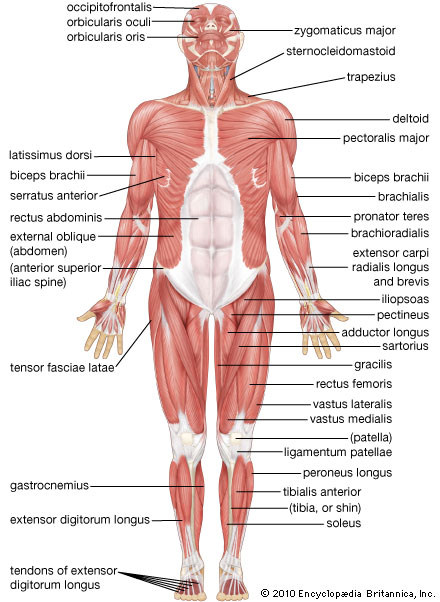
Along with Cognitive Behavioral Therapy (CBT), psychotherapy, drug therapy where necessary, Pet Therapy, and a few other disciplines mentioned in earlier posts, there are others which benefit the individual recovering from mental health difficulties. The therapist can suggest them during stages of the recovery process to bring maximum outcomes.
Acupuncture A licensed practitioner inserts needles in various points in the body to give relief to the individual from aches brought on from mental health problems.
Exercise Fitness routines are so important for members of the general population to engage in, and particularly individuals with mental health difficulties. Exercising allows them to look outward instead of focusing on psychological issues. Additionally, endorphins (a group of neurotransmitters) are released throughout the body during fitness routines. The individual is now placed in a calmer, happier frame of mind.
Massage Therapy A lower body immune system can result from lengthy mental health problems. This particular discipline removes the agonizing tension by a licensed practitioner manipulating the deep layers of the muscles and connective tissue, giving a sharp boost to the immune system.
Positive Psychology It can be devastating news when a person is diagnosed with a mental health issue, and result with a loss of self-esteem. This discipline assists in returning self-worth, joy, continuation of goals, and has the individual living instead of merely existing. Positive Psychology doesn’t ignore the medical condition, but primarily focuses attention on the individual’s fine qualities. As a result, the individual will understand that they are still a good parent, spouse, neighbor, friend, son, daughter, nephew, aunt, grandparent, uncle, and excel in their profession. The individual will also learn that even though they have a medical condition, they should never define themselves by their condition.
Positive Relationships Everyone should be involved in positive relationships. For the individual experiencing mental health problems, it’s so vitally important that relationships are positive with family, friends, employers, and co-workers. As a result, the therapist may inform them that negative relationships were contributing factors in the medical condition.
There are various ethically-approved disciplines available for the individual experiencing mental health challenges. They can experience a life of fulfillment with many wonderful opportunities awaiting them.
Vikki
Panic Attacks
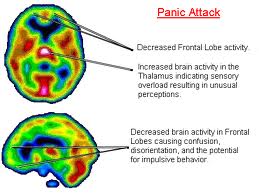
One of the numerous Anxiety Disorders is the panic attack, and this medical condition can overtake an individual in any given situation. Once an individual has had their initial attack, they’re automatically conditioned to have more of them. The following scenario is an example of what occurs for members of this population.
They’re driving taking the same routes they always have on the way to work, pick up the children, visit relatives and friends, or shop at the mall. Suddenly, a sensation of an alarm goes off inside their head. It’s a feeling of doom, death, and loss of control. Physiological reactions begin with clammy hands on the steering wheel, and a tight grip on the wheel for dear life. Perspiration appears on the forehead, upper lip. Their heart is beating rapidly, and entire body is trembling. They believe they’re having a heart attack, and pull over to the side of the road to collect themselves.
Panic attacks occur because of biological predisposition, learned behavior (i.e., catastrophizing), the individual was subjected to a tremendous amount of stress the prior year before the panic attacks began, or an abnormality in the brain. Also, this medical difficulty can result from positive events (i.e., getting married, new employer, childbirth, purchasing a residence, etc.).
Panic attacks can be treated successfully (after the physician has ruled out a heart condition) with relaxation methods (i.e., yoga, meditation), psychotherapy, Cognitive Behavioral Therapy (CBT), and a temporary low-dosage drug therapy.
Vikki
Conversion Disorder: A Neurological Issue
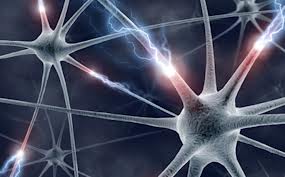
If an individual is going to suffer psychologically from a stressful/traumatic event, Post-Traumatic Stress Disorder (PTSD) is generally the condition they will experience. However, there are individuals who may experience repressed memory. This difficulty pertains to the brain’s inability to handle the event, the individual attempting to block memory of the event, with memory of the event tossed involuntarily into the subconscious (unconsciousness). Another result which can occur from these events is a conversion disorder. Let’s place this medical condition under a microscope for examination.
A conversion disorder is when the individual experiences neurological ailments brought on soon after an emotionally stressful event, with neurological assessments unable to rationalize the problem. The disorder can leave the individual with sudden numbness, paralysis, deafness, blindness, seizures, mute, and other neurological difficulties. Members of the population who are more at risk are those who have had earlier physical ailments, or mental health issues (i.e., dissociative disorder [escape from reality], or a personality disorder). Also, there is no malingering on the individual’s part because these physical challenges are genuine.
In particular circumstances, ailments can dissipate automatically within a few weeks. Be that as it may, an individual needs to seek medical attention immediately. Psychotherapy, stress management, and physical rehabilitation are valuable treatments in bringing relief for those who experience neurological issues from these types of events.
Vikki
The Duty to Protect and the Duty to Warn

Confusion still exists among members of the psychological community regarding the Duty to Protect and Duty to Warn doctrines. They are mutually exclusive principles. Professionals will first need to learn from respective state law whether both principles apply, if only one of them is allowed, and if the language is nuanced before entering their occupation. Let’s examine these principles to gain a better understanding what they concern.
The Duty to Protect doctrine indicates that members of the psychological community have a legal and ethical obligation to protect the patient. One of the important aspects is the therapist engaging in the most professional behavior. They must offer the highest, ethical treatment to their patients. Also, even though it can be difficult to predict, the therapist has the duty to protect the patient from harming themselves. Another factor is confidentiality regarding statements from the patient made in therapy, and a solid infrastructure to keep medical records from public consumption.
The Duty to Warn* doctrine indicates that when a therapist has a reasonable belief that a patient will harm a member of the public, the therapist has a number of options available: Contact the intended victim (without revealing the patient’s name), relatives and friends of the intended victim, law enforcement giving the patient’s name and the intended victim’s, implement an aggressive out-patient therapy for the patient, or have the patient hospitalized on an emergency basis. This doctrine gives the therapist permission to set aside patient confidentiality in order to protect the community.
Examples of Varied State Laws Concerning the Doctrines are Michigan, Ohio, and Vermont allow for both doctrines, while The Duty to Protect doctrine is applicable for Texas, but not the Duty to Warn doctrine. Also, The Duty to Protect doctrine is allowed in Utah, including Common Law Duty of Care (in place of the Duty to Warn doctrine).
The clinical practitioner will have to remain apprised of state laws where they decide to practice, or experience disciplinary action from their Board of Psychology and malpractice from patients.
*There are regions where therapists can warn intended victims, but aren’t obligated to do so.
Vikki
Depression: The Invisible Illness

There are several medical illnesses which are unnoticeable to the casual observer, and depression is one of them.* Depression is a sense of sadness which lasts for a lengthy period of time. The difficulty can occur from medications, aging, stress, genetics, learned behavior, life events, biochemical environment (organic), and a host of other reasons. Sometimes there are unknown causations. Depression is painful because the individual can experience body aches, a loss of sleep and appetite, motivation, self-esteem, and they may no longer engage in activities which were fulfilling. Irritability and a history of angry outbursts (anger management issues) are also symptoms of depression. One of the results from depression is a lower immune system, providing a window for physical ailments. The brain can become damaged from long-term depression, in which case psychotropic medication is required. With all of these particulars to consider, how should we respond when a loved one informs us they’re feeling depressed?
People who experience cancer, broken limbs, lupus, arthritis, sclerosis of the liver, bronchitis, etc. would be taken seriously because these are physically-oriented conditions. In the same manner, depression should be taken seriously, even though we’re incapable of seeing the illness.** We must always demonstrate compassion by listening, suggesting therapy, and possibly accompanying them to therapy sessions to show support. Compassion might be the most important step for loved ones returning towards a positive mental health.
*There are individuals who experience depression and may not realize it. They may have indicated they felt emotionally out of sorts, unwell, just a little blue, and believe, mistakenly, their emotional state is an acceptable way of living.
**All conditions which require visits to a medical practitioner should be taken seriously.
Vikki
Weight Gain Is More Complex Than The Food We Eat

All of us “gain weight” at some point in our lives. When we pursue a fitness program, remain under the daily allotted 3,600 calories, and take a B Complex B-12 vitamin (check with physician first), we can lose weight and those excess inches. However, there are individuals who gain weight, and it’s not primarily food causing the additional pounds. Let’s review some of the reasons family and friends experience this problem to raise awareness.
Behavioral Activation System (BAS). Many individuals believe that our stomach is the only part of the body to inform us when we’re full from eating. Actually, it’s the brain which informs the stomach. Unfortunately, there are individuals who may experience Binge Eating Disorder (BED) because of a heightened neurobehavioral process dependent upon dopamine. Cognitive Behavioral Therapy (CBT) is effective for individuals who experience this illness. In addition, there may be candidates for a Deep Brain Stimulation Implant (pacemaker) if CBT proves ineffective.
Blood Sugar Irregularities. It’s important that we eat a high-fiber breakfast every morning, even if it’s a small portion. The meal provides the necessary energy for appropriate blood sugar (glucose) levels in our bodies. Our pancreas generate the insulin hormone which carries the glucose into the body’s cells to use for energy. When insulin goes into high gear during the process, it ceases to burn fat and places the fat into storage. This isn’t a problem since we need a certain amount of fat in our systems. The challenge arises when insulin goes into high gear creating too much blood sugar. This blood sugar fails to get removed from blood, with blood sugar and insulin at unhealthy levels. The results are sluggishness and a desire for sugary snacks, creating more body weight. Yogurt, oatmeal, raspberries are some of the high-fiber foods we can snack on at regular intervals throughout the day.
Child Abuse. Children can experience Post-Traumatic Stress Disorder (PTSD) when subjected to abuse. The condition can result in nightmares. Nightmares result in a lack of sleep. The lack of sleep results in calories stored as unhealthy quantities of fat.
Farmed Fish. We naturally assume fish that’s cared for is healthier for our menu. However, not only can we experience osteoporosis and kidney stones because of what’s fed to the fish, we can also gain additional pounds.
Hormonal Adjustments in Menopause. Women have the highest levels of estrogen in their early twenties. As each year passes, the hormonal level decreases. When females enter the menopausal stage, hormones may not release from the brain causing weight gain, or as some studies have suggested, an increase of belly fat. A temporary Hormone Replacement Therapy (HRT) program can bring relief from the additional pounds. Women should ask physicians what the risks are since the program is controversial, determine whether HRT is appropriate for their health needs, and learn about safer options worth exploring.
Lack of Sleep in Adults. The medical community has suggested that if we sleep less than five hours, or more than nine, we can become overweight. Too little sleep means calories turning into excess fat, and too much sleep can develop an insatiable appetite.
Prescribed Medications. Antidepressants, pain management, birth control, allergy, blood pressure, and other medications can cause weight gain. It’s advisable to always ask the physician if there are effective alternatives of medication which don’t produce weight gain, or far less pounds.
Soft Drinks. Most of us enjoy a soft drink every once and again. However, for the individual who enjoys these beverages frequently, there is an additional ingredient they may not be aware of contributing to weight problems: Alcohol. This ingredient is in most popular brands of soft drinks. A trace amount of alcohol is all that’s required for addiction in members of the population, and too often they’re children.
Thyroid. Women of all ages can experience thyroid problems. When hormones have difficulty gaining release from the thyroid, excess weight is the consequence. Including protein with every meal, eating within an hour after waking every morning, eating at regular intervals, and steaming broccoli, cabbage, cauliflower are some of the remedies for getting the thyroid in balance.
The advancement of science has allowed us to realize that no longer can we immediately assume that weight gain is caused by food consumption alone. There are many perspectives to address the subject, and we can look forward to new discoveries.
Vikki
The Noise in Life and How We Can Protect Our Mental Health
Toddlers screaming with joy when playing with parents and grandparents. Listening to music from our favorite CDs, and audiobooks from popular writers. Hearing from relatives and friends about confirmation at university, employment opportunities. Cascading water fountains in backyards. The cheers from attendees at wedding ceremonies. These sounds and others like them are a delight. Unfortunately, there exist sounds in the universe which are unsettling, and if we’re not careful nurture in us an unstable mental health. Noise.
Figuratively speaking, the noise comes from newspapers, and literally from the evening news on television and radio. To expand further through these mentioned platforms, some members of the following entities generate the most disturbances: Public officials–Celebrities–The famous for being famous–Average citizens. None of us can escape because it’s everywhere. As soon as we turn our backs there’s additional noise disturbing the peace of our lives, rupturing the fabric of the universe. It can leave us in disbelief, produce a quiet anger, and sometimes the noise is tragic. How do we protect ourselves?
There are particular areas in life which we can’t control, to be sure. However, those areas which we can influence provides the means for building up a stronger infrastructure. In the process, it allows us to have more meaningful lives.
Volunteerism
- Nursing homes
- Veterans’ Hospitals
- General Hospitals
Bringing fruits and other treats for the patients. Their lives will become enhanced instantly because visits enable them to overlook ailments for awhile, and possibly loneliness.
Mentoring
- Big Brothers-Big Sisters Organization
- Girl Scouts
- Boy Scouts
Children never forget the one individual who made a positive difference in their lives.
Assisting Veterans Retired medical staff members can bring disabled Veterans into their homes to live. It could be one of the greatest compliments the Veterans ever received for military service. Household members can learn from each other.
Creating/Joining Causes We’re Passionate About
- Child Protection Services
- Sports Programs for Children (when school districts are financially unable)
- Philanthropic Organizations
- Military Groups (sending care packages: non-perishable foods, cell phones with batteries, computers, personal hygiene items, cards and letters, etc.)
- Habitat for the Humanities (many couples with children will appreciate)
- Animal Rescue Agencies
That noise. Well, it’s not going anywhere. But when we live more purposeful lives, by pouring the cement for a sturdier universe, we also create the foundation for maintaining a positive mental health.
Vikki
 Victoria Sutton's Psychology Blog
You must be logged in to post a comment.