World Mental Health Day

When every region on this planet has an adequate amount of mental health facilities, therapists, and medicine to treat its citizens, perhaps we can then say we’re entering a phase of global health success!  Many people are living in war-torn areas, while others are dealing with natural disasters.  These calamities take a toll on a person’s mental health.  That is one reason why mental health experts are especially important for these global residents.

The References

The following resources have a wealth of information for individuals experiencing mental health conditions, for those providing emotional support to loved ones who’ve been diagnosed, and others without conditions who simply wish to become more knowledgeable regarding mental health sciences.  

The Importance Of Relaxing

The following nature video (Relaxing Tree, 2020) is a reminder that visiting parks and listening to the sounds of nature can become a vital ingredient in having and maintaining calmness for positive mental health.  It can become a method of getting away from it all periodically!

[VIDEO:  4K RELAXING NATURE SOUNDS – SHORT VIDEO CLIPS OF NATURE:  SOURCE:  RELAXING TREE, 2020]

Other forms of relaxation can involve meditating, engaging in yoga exercises, participating in arts such as sewing, crocheting, knitting, reading publications from favorite bookstores, and taking a walk after dinner, which can help reduce a few calories as an added benefit.  Listening to quiet music, cooking/baking, gardening, housework, painting, sculpting, coloring in a coloring book, landscaping, drawing, building furniture, writing in a spiral notebook about one’s feelings and experiences, and watching television are also forms of relaxation.  

A Person Should Never Label Oneself

An important aspect to remember is that just because a person is diagnosed with a mental health condition doesn’t suggest even remotely that they are a mental health condition.  What the diagnosis means is that it’s another one of life’s challenges.  

A Person Should Never Blame Themselves, Nor Compare Themselves

Some people will experience influenza and will suffer from symptoms temporarily.  It could be because they’re younger, have no prior history of respiratory issues, and lack a compromised immune system.  Conversely, other people may have a longer bout of the illness since they have a prior history of respiratory issues, they’re older, and already have a compromised immune system.  

In a similar vein, each person who is diagnosed with a mental health condition may have a different reason for their mental health condition.  For example, a person could be diagnosed with schizophrenia because they also have a form of Alzheimer’s Disease (i.e., comorbidity–more than one condition).  Another person is diagnosed with schizophrenia because they have a sibling (twin) or a parent who was diagnosed with the condition years earlier (i.e., genetics).  In taking the conversation in another direction, a person could be diagnosed with mild depression and needs medication temporarily because it began with becoming overwhelmed by life.  They experienced too many negative personal life events.  And then for another person diagnosed with depression, they may have to use prescriptions for the rest of their life because their brain chemistry has changed dramatically. 

The associations, the causations, the bottom-up (i.e., physical illness bringing on the mental health condition), and other explanations are too involved and nuanced for the “How did this person acquire a mental health condition?”  Thus, there can be any number of reasons why a person acquired a mental health difficulty, and it may not be a similar reason for other people with the same condition.  Also, there could be situations where there are no known current explanations why someone ended up with a mental health condition, because those reasons are waiting for scientific discovery.

Getting Rid Of Stigmas

In the constant struggle to remove the stigma that remains in society concerning mental health challenges, people with psychiatric issues need to remember that they are not alone.  Everyone has some form of mental health issue.  Some mental health issues are minor, others are large, while others are dealing with comorbidity.  Whatever the circumstance, everyone has something they’re dealing with.  A person needs to keep going and live their life to the best of their ability!

There Is No Room For Negativity

Anyone who would make comments that a person with a mental health condition needs to “Get over it” or some other form of mocking/psychological abuse is not someone who should be in anyone’s social circle during the adjustment and recovery phase, and that could be for a lifetime.  When a person is dealing with a psychiatric issue, they need supportive individuals who provide empathy and lots of encouragement.  Actually, the toxic entities could be individuals who contributed to the mental health condition.

A Mental Health Issue Is Not Necessarily Psychiatric, Requiring Medication

A psychiatric issue occurs when the brain chemistry has changed (i.e., an imbalance of a specific neurotransmitter) and a clinical therapist is required (i.e., psychiatrist).  For instance, a person diagnosed with schizophrenia has an imbalance of dopamine (an imbalance of dopamine is associated with schizophrenia).  Thus, medication is necessary to create a healthy brain chemistry.  Other people may have phobias (i.e., height, insects, certain animals, specific places, etc.), and a psychologist would be suggested for learning techniques in removing said phobias.  A psychologist is ideal when experiencing relationship difficulties.  A psychologist might be used for cognitive behavioral therapy (CBT) to help a client learn new thinking strategies in maneuvering life, along with achieving goals.

The following is a video that talks about psychotherapy, which is a completely different brand of therapy altogether:

[VIDEO:  WHAT IS PSYCHOTHERAPY?  SOURCE:  PSYCH HUB, 2020]

Family Members Becoming Involved In Their Loved Ones’ Journey

It cannot be emphasized enough that family members can make important contributions when a person is diagnosed with a psychiatric condition.  Members can provide a guardrail of sorts in making certain that individuals keep doctor’s appointments with therapists and take prescribed medications.  They can even attend these doctor appointments with their loved ones.  The person diagnosed with a psychiatric condition can believe that they have partners in gaining a positive quality of life.  In extreme cases, a family member may need to obtain conservatorship.  All of these suggestions can avoid potential tragic situations with law enforcement, which we hear all too often in the media.

Weight Gain From Medications Is A Possibility, Although…

People who are diagnosed with a psychiatric condition need to ask the therapist for prescriptions that have a much lower possibility of weight gain.  Many of these psychotropics and antidepressants (Bright Horizons Psychiatry, 2024) are not only responsible for a larger waistline, but also for the possibility of experiencing metabolic syndrome because of the additional weight gain (i.e., higher blood pressure, higher blood sugar leading to cardiovascular issues) (Cleveland Clinic, 2025).   Conversely, a psychotropic and antidepressant may not necessarily cause actual weight gain.  Taking these medications can result in a complete change to the body’s metabolism.  Some individuals can experience fatigue, water retention, hormonal changes, and other modifications without additional calories to their diet (Bright Horizons Psychiatry, 2024).

As an aside, imagine the middle-aged woman who was already experiencing metabolic syndrome because of weight gain from hormonal changes (menopause), and is now prescribed an antidepressant or psychotropic.  She will have to worry about even more weight gain difficulties, and unfortunately, could become a likely candidate for cardiovascular issues, and worse.

An Important No-No

If a person wants to go off their medication, that procedure needs to be done with the guidance of the therapist and gradually!  Waking up one morning and deciding to cease taking medication can send an individual spiraling out of control, and with tragic consequences to themselves and others.

Finally, dealing with a mental health condition, especially one that has altered the brain chemistry, is rough!  Having said that, once a person has gained clarity through doctor visits and taking medication, a person could use their condition and start anew with living their life instead of merely existing!  

Here’s wishing you good health, love, and lots of understanding!

Vikki

References

American Academy Of Neurology.  (2025).  Brain Health For All.  Retrieved From https://www.aan.com/

American Psychological Association. (2025).  We promote psychological science and knowledge to benefit society and improve lives.  Retrieved From apa.org

Behavioral Scientist.  (2025).  Health.  Retrieved From https://behavioralscientist.org/topics/health/

Better Health Channel.  (2022).  Cognitive Behaviour Therapy (CBT).  Retrieved From https://www.betterhealth.vic.gov.au/health/conditionsandtreatments/cognitive-behaviour-therapy

Bright Horizons Psychiatry. (2024).  Managing Weight Gain Caused By Psychiatric Medication.  Retrieved From https://brighthorizonspsychiatry.com/managing-weight-gain-caused-by-psychiatric-medication/

Cleveland Clinic.  (2025).  Metabolic Syndrome.  Retrieved From https://my.clevelandclinic.org/health/diseases/10783-metabolic-syndrome

deVries, L. P., van de Weijer, M. P., and Bartels, M.  (2022).  The Human Physiology Of Well-Being: A Systematic Review On The Association Between Neurotransmitters, Hormones, Inflammatory Markers, The Microbiome And Well-Being.  (Vol. 139). https://doi.org/10.1016/j.neubiorev.2022.104733  Retrieved From https://www.sciencedirect.com/science/article/pii/S0149763422002226

Europe’s Journal Of Psychology.  (2025).  An Online-Only, Open-Access Journal For Scientific Inquiries Into A Wide Range Of Topics In Psychology – Free Of Charge For Authors And Readers.  Retrieved From https://ejop.psychopen.eu/index.php/ejop

Healthcare Communications Network.  (2025).  Psychiatry.  Retrieved From https://hcn.health/hcn-trends-story/category/psychiatry/

Healthline.  (2025).  Mental Well-Being.  Retrieved From https://www.healthline.com/mental-health

JAMA Network.  (2025).  Psychiatry.  Retrieved From https://jamanetwork.com/journals/jamapsychiatry

MDPI.  (2025).  Journal Of Behavioral Sciences.  Retrieved From https://mdpi.com/journal/behavsci

MedicalNewsToday.  (2025).  Mental Health.  Take Care Of Your Mental Well-Being With Evidenced-Backed Resources.  Retrieved From https://www.medicalnewstoday.com/mental-health

Miller, C. (2025).  Mental Health Disorders And Teen Substance Use.  Why It’s Especially Tempting – And Risky – For Kids With Emotional Or Behavioral Challenges.  Retrieved From https://childmind.org/article/mental-health-disorders-and-substance-use/

National Alliance On Mental Illness.  (2025).  Dissociative Disorders.  Retrieved From https://www.nami.org/about-mental-illness/mental-health-conditions/dissociative-disorders/

Neuroscience News.  (2025).  Latest Neuroscience News.  Retrieved From https://neurosciencenews.com/

NewScientist.  (2025).  Mind.  Retrieved From https://www.newscientist.com/subject/mind/

Psyche.  (2025).  Know Your Self.  Retrieved From https://psyche.co/

Psych Hub.  (2020, November 3).  What Is Psychotherapy?  [VIDEO].  Retrieved From https://www.youtube.com/watch?v=wmHcB8aOlkI

Psychiatrist.  (2025).  Just Published.  Retrieved From https://www.psychiatrist.com/

Relaxing Tree.  (2020, October 10).  4K Relaxing Nature Sounds – Short Video Clips Of Nature.  [VIDEO].  Retrieved From https://youtu.be/nqye02H_H6I?si=iHaQAgPVoU025-mF

ScienceDaily.  (2025). Mind & Brain News.  Retrieved From https://www.sciencedaily.com/news/mind_brain/

Smithsonian Magazine.  (2025).  Science/Mind & Body.  Retrieved From smithsonianmag.com/category/mind-body

Taylor & Francis Online.  The Journal Of Social Psychology.  Latest Articles.  Retrieved From https://www.tandfonline.com/action/showAxaArticles?journalCode=vsoc20

The British Psychological Society.  (2025).  Explore Psychological Publications.  Retrieved From https://explore.bps.org.uk/

The Scientist.  (2025).  Exploring Life, Inspiring Innovation.  Retrieved From https://www.the-scientist.com/tag/psychology

Therapy In A Nutshell.  (2025).  No One Ever Taught You How To Regulate Your Emotions.  Let’s Change That Today.  Retrieved From https://therapyinanutshell.com/

Thompson, D.  (2025).  Industrial Chemical Linked To Parkinson’s Disease.  Retrieved From https://www.medicinenet.com/industrial_chemical_linked_to_parkinsons_disease/news.htm

Wiley Online Library.  (2025)  Psychiatry.  Retrieved From https://onlinelibrary.wiley.com/action/doSearch?AllField=psychiatry

World Health Organization.  (2025).  Bipolar Disorder.  Retrieved From https://www.who.int/news-room/fact-sheets/detail/bipolar-disorder
Good News About Depression! People Are Taking Ownership Of Their Mental Health Conditions

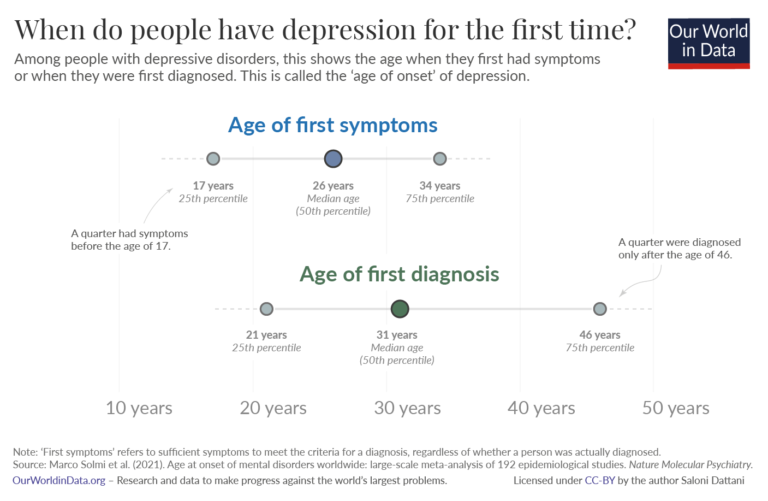
There’s been a disconnect for the longest time regarding when people had their initial symptoms for depression, and when they made a concerted effort to receive professional diagnosis and treatment (Dattani, 2022).

Members of the public may have feared being ostracized if others found out they suffered from a mental health condition (Community Reach Center, 2019). They may have thought their symptoms would miraculously disappear. To expand further, they may have been unaware of the procedures in obtaining mental health services, while others may not have had mental health services readily available in their locale (Community Reach Center, 2019).

Regardless of the explanations for not getting mental health services, a mental health condition is probably the most intrusive ailment a person could ever encounter because the brain controls the entire body. As a result, the longer depression goes untreated the greater the chances for a brain chemical imbalance.

The Mayo Foundation For Medical Education And Research (2022) provides images [Positron Emission Tomography (PET) Scans] of a brain under the influence of depression, and what a healthy brain looks like.

Consequently, the person who could have obtained early diagnosis and been placed on a psychotherapy and Cognitive Behavioral Therapy (CBT) treatment program (World Health Organization, 2021, and National Alliance On Mental Health, 2017), now has to be placed on psychotropics because they waited too long to seek help.

Depression can shrink the brain (i.e., the brain is under assault from depression), which can interfere with the natural flow of neurotransmitters (Amiel, 2022) and (Davey, 2015).

As the years progress, more people are getting early diagnosis for symptoms associated with depression, and doing so in earlier periods of their lives (Dattani, 2022). This acceptance can be considered a brand of preventative treatment by health consumers: People who take an active role in maintaining good health, and taking steps in avoiding a current condition from becoming worse (Health Consumers NSW, 2019).

Vikki

References

Amiel, M., M. D. (2022). What Happens To The Brain During Depression? Retrieved From https://www.transformationstreatment.center/treatment/what-happens-to-the-brain-during-depression/#:~:text=Depression%20causes%20the%20hippocampus%20to,of%20cortisol%2C%20the%20amygdala%20enlarges.

Community Rearch Center. (2019). Why People Don’t Seek Treatment For Depression. Retrieved From https://www.communityreachcenter.org/news/why-people-dont-seek-treatment-for-depression/

Dattani, S. (2022). At What Age Do People Experience Depression For the First Time? Retrieved From https://ourworldindata.org/depression-age-of-onset#:~:text=As%20the%20data%20shows%2C%20on,later%2C%20at%2031%20years%20old.

Davey, M. L. (2015). Mental Health. Chronic Depression Shrinks Brain’s Memories And Emotions. Retrieved From https://www.theguardian.com/society/2015/jun/30/chronic-depression-shrinks-brains-memories-and-emotions

Health Consumers NSW. (2019). Who Is A Health Consumer? and other definitions. Retrieved From https://www.hcnsw.org.au/consumers-toolkit/who-is-a-health-consumer-and-other-definitions/#:~:text=Health%20Consumers%20are%20people%20who,the%20service%20in%20the%20future.

Mayo Foundation For Medical Education And Research. (2022). PET Scan Of The Brain For Depression. Retrieved From https://www.mayoclinic.org/tests-procedures/pet-scan/multimedia/-pet-scan-of-the-brain-for-depression/img-20007400#:~:text=A%20PET%20scan%20can%20compare,brain%20activity%20due%20to%20depression.

National Alliance On Mental Health. (2017). Depression. About Mental Health. Retrieved From https://www.nami.org/About-Mental-Illness/Mental-Health-Conditions/Depression

World Health Organization. (2021). Depression. Key Facts. Retrieved From https://www.who.int/news-room/fact-sheets/detail/depression

Endnotes

  1. Solmi, M., Radua, J., Olivola, M., Croce, E., Soardo, L., Salazar de Pablo, G., Il Shin, J., Kirkbride, J. B., Jones, P., Kim, J. H., Kim, J. Y., Carvalho, A. F., Seeman, M. V., Correll, C. U., & Fusar-Poli, P. (2021). Age at onset of mental disorders worldwide: Large-scale meta-analysis of 192 epidemiological studies. Molecular Psychiatryhttps://doi.org/10.1038/s41380-021-01161-7
    The studies included in this meta-analysis measured this age in different ways. Some studies looked at the age when symptoms of the disorder began, some looked at when they were first diagnosed, and others looked at when they first received treatment for the disorder or were first hospitalized for it. The median age of onset for some disorders, such as substance use disorders, mood disorders and anxiety disorders was earlier when it was measured by first symptoms than when it was measured by first diagnosis or first hospitalization.
  2. Medici, C. R., Videbech, P., Gustafsson, L. N., & Munk-Jørgensen, P. (2015). Mortality and secular trend in the incidence of bipolar disorder. Journal of Affective Disorders183, 39–44. https://doi.org/10.1016/j.jad.2015.04.032
    Mauz, E., & Jacobi, F. (2008). Psychische Störungen und soziale Ungleichheit im Geburtskohortenvergleich. Psychiatrische Praxis35(07), 343-352. https://www.thieme-connect.com/products/ejournals/abstract/10.1055/s-2008-1067557
    Scott, J., Etain, B., Azorin, J. M., & Bellivier, F. (2018). Secular trends in the age at onset of bipolar I disorder – Support for birth cohort effects from international, multi-centre clinical observational studies. European Psychiatry52, 61–67. https://doi.org/10.1016/j.eurpsy.2018.04.002
    Plana‐Ripoll, O., Momen, N. C., McGrath, J. J., Wimberley, T., Brikell, I., Schendel, D., Thygesen, M., Weye, N., Pedersen, C. B., Mors, O., Mortensen, P. B., & Dalsgaard, S. (2022). Temporal changes in sex‐ and age‐specific incidence profiles of mental disorders—A nationwide study from 1970 to 2016. Acta Psychiatrica Scandinavica, acps.13410. https://doi.org/10.1111/acps.13410
  3. Plana‐Ripoll, O., Momen, N. C., McGrath, J. J., Wimberley, T., Brikell, I., Schendel, D., Thygesen, M., Weye, N., Pedersen, C. B., Mors, O., Mortensen, P. B., & Dalsgaard, S. (2022). Temporal changes in sex‐ and age‐specific incidence profiles of mental disorders—A nationwide study from 1970 to 2016. Acta Psychiatrica Scandinavica, acps.13410. https://doi.org/10.1111/acps.13410
  4. Schomerus, G., Schwahn, C., Holzinger, A., Corrigan, P. W., Grabe, H. J., Carta, M. G., & Angermeyer, M. C. (2012). Evolution of public attitudes about mental illness: A systematic review and meta-analysis: Evolution of public attitudes. Acta Psychiatrica Scandinavica125(6), 440–452. https://doi.org/10.1111/j.1600-0447.2012.01826.x
    Angermeyer, M. C., Matschinger, H., & Schomerus, G. (2013). Attitudes towards psychiatric treatment and people with mental illness: changes over two decades. The British Journal of Psychiatry203(2), 146-151.
  5. While 0.4% of children and adolescents were in contact with a psychiatric department in 2001, that figure was 3.3% in 2018. The Danish Health Data Authority. (2019) Key numbers about health care in Denmark (in Danish). https://sundhedsdatastyrelsen.dk/da/tal-og-analyser/analyser-og-rapporter/sundhedsvaesenet/noegletal-om-sundhedsvaesenet
    ​​Schmidt, M., Schmidt, S. A. J., Adelborg, K., Sundbøll, J., Laugesen, K., Ehrenstein, V., & Sørensen, H. T. (2019). The Danish health care system and epidemiological research: From health care contacts to database records. Clinical EpidemiologyVolume 11, 563–591. https://doi.org/10.2147/CLEP.S179083
  6. Babatunde, G. B., van Rensburg, A. J., Bhana, A., & Petersen, I. (2021). Barriers and Facilitators to Child and Adolescent Mental Health Services in Low-and-Middle-Income Countries: A Scoping Review. Global Social Welfare8(1), 29–46. https://doi.org/10.1007/s40609-019-00158-z
    Kieling, C., Baker-Henningham, H., Belfer, M., Conti, G., Ertem, I., Omigbodun, O., Rohde, L. A., Srinath, S., Ulkuer, N., & Rahman, A. (2011). Child and adolescent mental health worldwide: Evidence for action. The Lancet378(9801), 1515–1525. https://doi.org/10.1016/S0140-6736(11)60827-1

A Dangerous Mental Health Condition**

It has to be reiterated that most people diagnosed with a psychiatric illness pose no danger to others, or themselves. The majority of this population desire a well-adjusted mental health.  As positive as that reality is, we have to understand various causations in that small percentage who do become dangerous.  It’s an unpleasant subject many refuse to look at, with several media pundits unwilling to have honest discussions, talking around the issue as though if it’s left out of the conversation no one will notice.  However, until society does focus on “mental” instability and “dangerousness”, the world won’t see a reduction of this brand of criminality.  The following are several items which deserve analysis.*

  • Sudden Stoppage of Medication.  A lion pouncing on someone when it hasn’t eaten for a few days. It’s analogous to the patient who may become dangerous when they suddenly stop taking medication.  These pills are strong and take several weeks to gain traction to reduce symptoms associated with the condition.  Thus, it’s a shock to the brain when the medication is no longer in the system, which may result with the patient spinning out of control mentally.  If they wish to cease taking medication, they should inform the psychiatrist to gradually receive lesser dosages over a period of time, until they are no longer on the psychotropics.
  • Lack of Guardian.  Families have to take the initiative in getting a conservatorship when they believe a member is irresponsible in caring for their mental health.  The patient has to report to this guardian on a daily basis before proceeding with usual activities.  It’s a form of neglect, regardless the age of the patient, to allow them to enter society with an unprepared mental health.
  • Alcohol, Illegal Drugs p. 1.  A patient is setting themselves up for a mental thunderstorm when combining these substances with their mental health condition whether they’re using psychotropics, or not.
  • Alcohol, Illegal Drugs, p. 2.  The individual who begins with a healthy psychology, then starts abusing these substances, automatically has a mental illness, even if they don’t have schizophrenia, mood disorders, and other psychiatric conditions associated with a chemical breakdown from using drugs.
  • Lack of Positive Coping Mechanisms. This skill set is important for everyone, especially the patient who has to remember that disappointments are a part of life.
  • Ordinary Citizens. Failing to call the police when they observe someone they wholeheartedly believe may pose a danger to society.  Even if police can’t do anything: We have to wait until something actually happens, there’s a paper trail about the individual they can refer to.
  • Deep-Brain Injury.  An individual could begin with a healthy psychology, then experiences a deep-brain injury.  Not everyone in this category is dangerous, although some may result with a level of dangerousness (i.e., ASPD Level 2).  They have to be monitored on a regular basis with a host of evaluations because of personality changes.
  • A Blow to the Head, but not Deep-Brain Injury.  A patient may experience personality changes, temporarily, which have to be monitored on a regular basis with a host of evaluations.
  • Congenital Brain Malfunction. The individual has to be supervised on a regular basis by family (i.e., conservatorship), psychiatrists, and physicians.
  • The Lack of Workplace Personality Assessments.  The employer who refuses this instrument for the pre-employment screening could face unbelievable liability.
  • The Psychological Board. A compulsory standard Duty to Protect and Duty to Warn doctrines are required in all states and districts, instead of both doctrines in some regions, one or the other in separate regions, and the incredibly vague language nurturing confusion.
  • The Clinician.   If they fail in whatever current Duty to Protect/Duty to Warn responsibilities, they have created a series of events they will regret forever.
  • Police Officers.  Most are a community’s best friend!  They have incredible challenges which couldn’t have been recognized when joining the Police Force because of increased responsibilities.  An officer never wants to pull the trigger unless it’s absolutely necessary, and most never fire their guns.  They wish to return to their families at the end of an exhausting day.  However, if an officer fails to respond when the clinician informs them in their Duty to Warn capacity, they should turn in their badge and find a different area of employment.

Conclusion

A safer world becomes prevalent only when an honest dialogue about mental health begins, with additional entities becoming more involved, instead of believing it’s someone else’s problem.

*There are always unknown causations waiting to be discovered.

**Not every dangerous person has a mental illness.


Vikki